
Choosing the Right Drill Bit: The First Step to Better Drilling Efficiency
In water well drilling, geothermal drilling, mining exploration, and geological engineering, different depths often correspond to different geological conditions. When a well begins, the bit may first encounter soft soil, clay, sand, or loose overburden. As depth increases, the formation gradually transitions to weathered rock, sandstone, mudstone, limestone, or other rocks of higher strength.
However, if the same drill bit is used throughout the entire process, it may not deliver the best drilling efficiency. For example, a simple, aggressive three-wing tungsten carbide drag bit can achieve economical and efficient spudding in soft overburden. Furthermore, when drilling enters rock with a certain integrity and strength, a three-wing PDC drag bit can leverage the shearing advantages of its polycrystalline diamond compact cutters.
Consequently, for projects that must penetrate multiple formations, using different bit types in phased construction is an optimization approach worth considering. Therefore, this article analyzes the two bit types from the perspectives of cutting principle, applicable formations, drilling efficiency, wear resistance, and practical workflow.
1. Three-Wing Tungsten Carbide Drag Bit: Ideal for Soft Formations and Fast Spudding
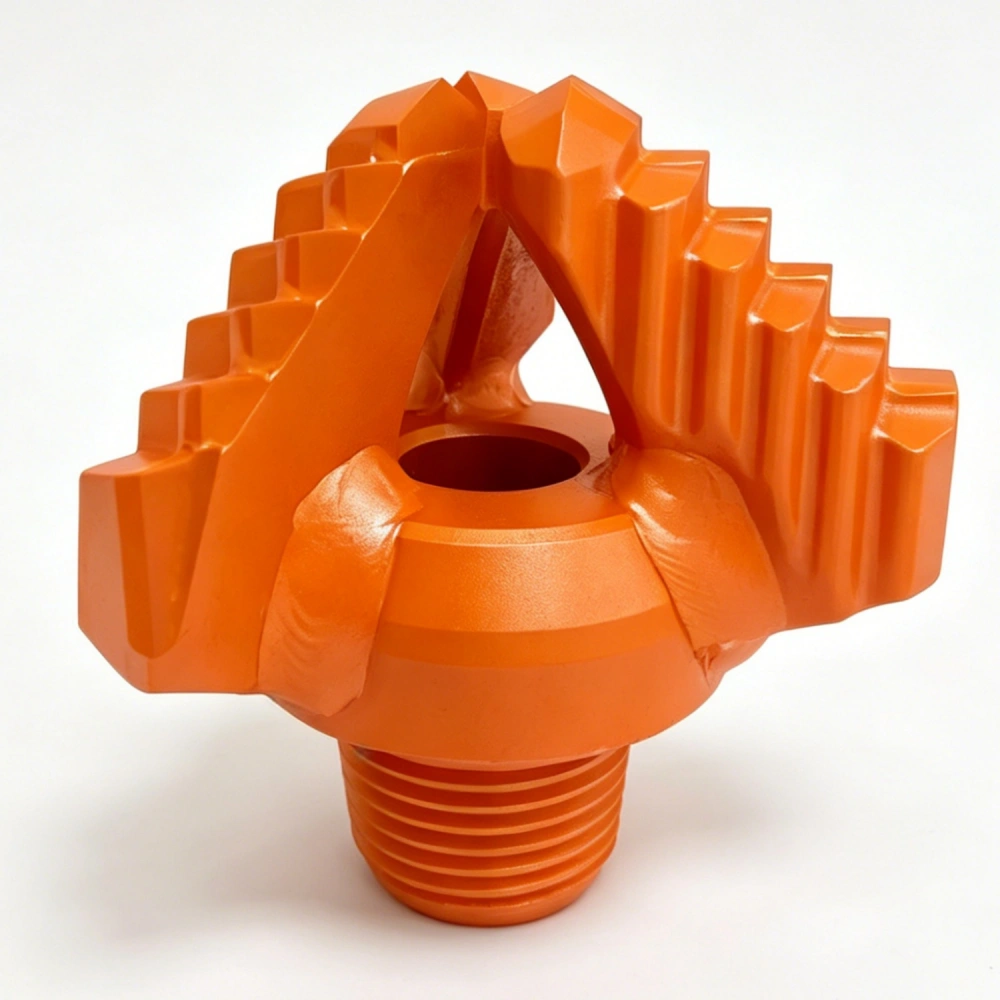
Generally, the Three-Wing Tungsten Carbide Drag Bit is a common fixed-cutter bit. It typically uses a three-wing structure with tungsten carbide cutting elements and wear-protection features. Its main working principle is to scrape, shear, and break the formation through the cutting action generated by bit rotation.
📌 Main Applicable Formations
- Soft soil and overburden
- Clay layers
- Loose sand (subject to formation stability and flushing conditions)
- Soft mudstone
- Some weak weathered layers
- Other low-strength formations suitable for scraping
⚡ Product Advantages
- Fast spudding: The three-wing structure cuts into the formation effectively and reduces drilling resistance — making it an economical spudding tool.
- Simple and economical: Lower purchase cost, suitable for cost-sensitive projects.
- Suitable for weak formations: Stable performance in uniform, low-abrasion formations.
- Ideal for initial phase: Reduces the use of high-performance PDC bits in non-advantageous conditions.
2. Three-Wing PDC Drag Bit: Ideal for Rock Formations and Continuous Shear Cutting
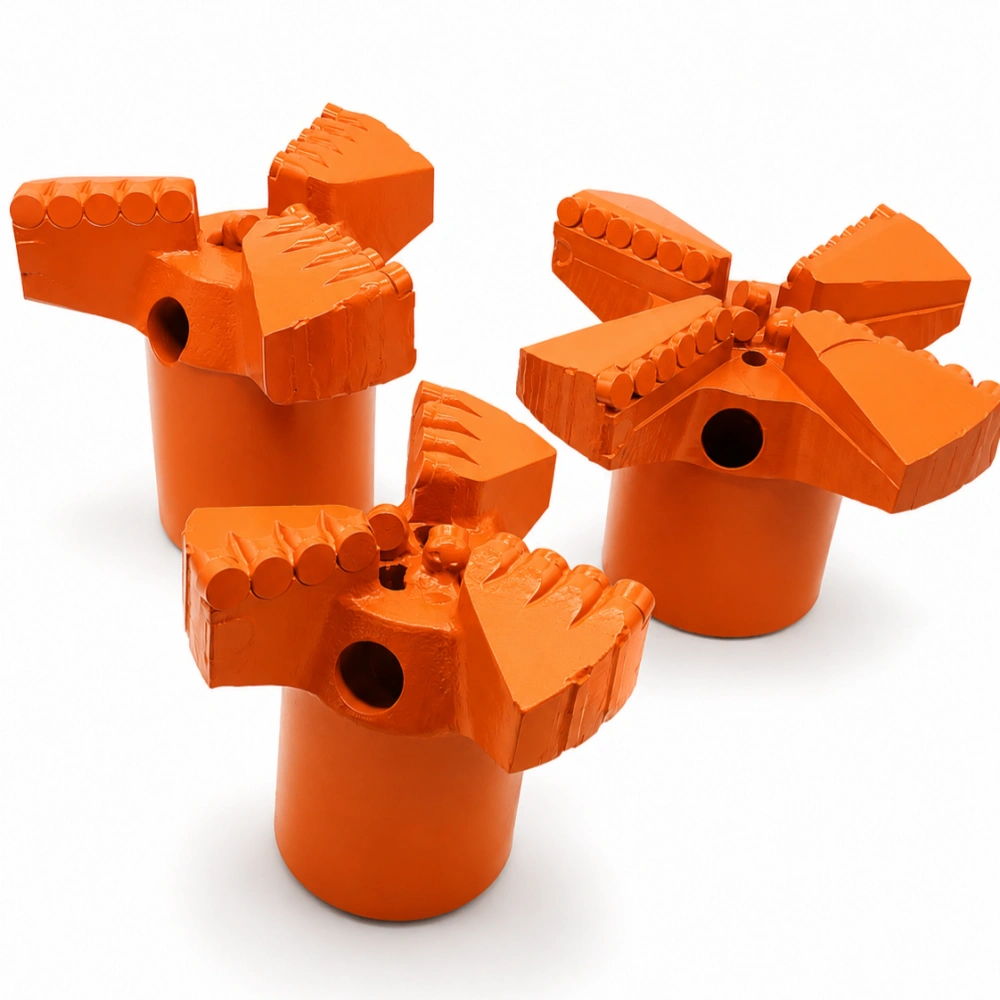
By contrast, the Three-Wing PDC Drag Bit is a fixed-cutter bit that uses Polycrystalline Diamond Compact (PDC) cutters as its main cutting elements. Unlike conventional carbide drag bits, PDC bits contact the formation through diamond compacts. Subsequently, they continuously shear the rock under the combined action of weight on bit (WOB) and rotary torque.
📌 Main Applicable Formations
- Soft to medium-soft sandstone
- Mudstone, shale
- Some limestone and dolomite (depending on strength and abrasiveness)
- Some medium-hard, non-highly-abrasive rock
- Other formations suitable for PDC cutting structures
⚡ Product Advantages
- Efficient shear cutting: Sharp cutting edges remove rock by shearing, delivering a high rate of penetration (ROP).
- Excellent wear resistance: High hardness of diamond compacts maintains effective cutting capacity for a long time.
- Suitable for continuous drilling: Stable performance when matched to the formation, reducing trips to change bits.
- Lower overall drilling cost: Higher initial cost, but better cost-per-foot economics.
3. Technical Comparison: Three-Wing Carbide Drag Bit vs. Three-Wing PDC Drag Bit
| Comparison Item | Three-Wing Carbide Drag Bit | Three-Wing PDC Drag Bit |
|---|---|---|
| Main cutting material | Tungsten carbide | PDC diamond compact |
| Rock-breaking method | Scraping, shearing | High-efficiency shearing |
| Main application | Soft overburden, weak formations | Soft to medium-hard rock |
| Soft-ground spudding | Very suitable | Depends on formation |
| Rock drilling | Limited applicability | Better suited to matched rock |
| Wear resistance | Depends on carbide grade and structure | Generally high |
| Purchase cost | Generally lower | Generally higher |
| Economic advantage | Low-cost fast spudding | Higher rock footage efficiency and service life |
Neither bit is absolutely superior. Therefore, the right choice should be based on a comprehensive analysis of formation strength, rock abrasiveness, rig capability, and construction cost.
4. Practical Construction Plan: Start with Carbide Drag Bit, Then Switch to PDC
For projects that must penetrate soft overburden and subsequent rock layers, a phased drilling approach can be considered.
Soft Overburden — Use Three-Wing Carbide Drag Bit
In the initial stage, the formation may consist mainly of surface soil, clay, loose sand, and weak overburden. The main goal of this phase is to complete initial drilling quickly and prepare for entering rock. Consequently, a three-wing carbide drag bit is recommended. With appropriate WOB, RPM, and flushing conditions, the carbide cutting structure quickly removes soft formation.
Main advantages: Lower tool cost for initial drilling; higher spudding efficiency in suitable formations; avoids premature use of higher-cost PDC bits; creates conditions for subsequent rock drilling.
Construction notes: For loose sand, highly flowing soil, and collapse-prone overburden, pay special attention to hole-wall stability. Use mud or casing if necessary, because bit type alone cannot solve hole-wall problems.
Entering Transition Formation — Decide Whether to Change the Bit
As depth increases, the formation may gradually transition from soft soil to weathered rock, sandstone, or mudstone. At this stage, do not decide whether to change the bit based on depth alone. Instead, use real-time drilling data.
Key changes to observe:
- Rate of penetration (ROP): Footage rate continuously decreases with unchanged equipment parameters and drilling fluid conditions.
- Drilling torque: Cutting resistance increases, and rotary torque changes noticeably.
- Cuttings: Returned cuttings change from loose soil to rock fragments of certain strength.
- Formation hardness: Obvious rock interbeds or continuous rock layers appear.
When these signs together indicate a formation change, re-evaluate the bit configuration. Note that a drop in ROP alone does not prove the bit should be changed, as it may also relate to bit wear, poor cuttings removal, or drilling fluid performance.
Entering Suitable Rock — Switch to Three-Wing PDC Drag Bit
Once drilling has entered rock with a certain integrity and strength, and the formation is suitable for PDC cutting structures, trip out and switch to a three-wing PDC drag bit. At this point, the advantages of the PDC bit come into play. Its diamond compacts continuously shear the rock and reduce the wear issues of conventional carbide cutting structures in certain formations.
With reasonable WOB, RPM, and cuttings removal, you can achieve higher ROP in rock. Additionally, you can maintain sustained and stable cutting capacity, reduce bit changes caused by rapid cutter wear, and increase effective drilling time. Ultimately, this improves the cost-per-foot economics for the whole project.
Key principle: Do not wait until the carbide drag bit is severely worn or completely loses cutting ability before switching to PDC. Plan the change in advance based on formation changes and drilling performance.
Continuously Optimize Drilling Parameters
After switching to the PDC bit, adjust parameters to the actual rock. Key parameters include: WOB (Weight on Bit), RPM (Rotations Per Minute), hydraulic cleaning and cuttings removal, torque, and ROP (Rate of Penetration).
For softer, uniform formations, a combination of higher RPM and moderate WOB can usually be considered. Conversely, for harder formations or those with interbeds, adjust WOB and RPM more carefully to avoid impact, vibration, and cutter damage. Specific parameters must be determined based on bit diameter, rig performance, drill string assembly, formation characteristics, and manufacturer recommendations. Therefore, a single fixed set of parameters should not be applied to every site.
5. Why Proper Bit Switching Reduces Overall Drilling Cost
For professional drilling contractors, bit purchase price is not the only cost indicator. What truly matters is the overall cost per foot. If only one bit type is used throughout, two scenarios may occur:
From an engineering economics perspective, consider:
Consequently, the most economical drilling plan is not necessarily the one with the lowest purchase price. Instead, it is the bit combination that completes more effective footage in reasonable time and reduces overall construction cost.
6. Key Factors to Consider Before Bit Selection
🌍 Formation Conditions
- Type of soil or rock
- Rock compressive strength
- Formation abrasiveness
- Presence of gravel and hard interbeds
- Formation uniformity and integrity
⚙️ Drilling Equipment
- Rated rig torque
- Available WOB
- Maximum operating RPM
- Flushing system and pump capacity
- Drill rod and connection thread specifications
🎯 Construction Objectives
- Planned drilling depth
- Daily footage requirements
- Bit change and trip costs
- Construction budget
- Target cost per foot
Ultimately, only by fully understanding these conditions can you choose the bit that truly fits the site.
7. Conclusion: Let the Right Bit Deliver Maximum Value in the Right Formation
In summary, the three-wing carbide drag bit and the three-wing PDC drag bit each have distinct structural characteristics and application ranges. The carbide drag bit suits soft overburden and some weak formations and provides an economical, practical initial drilling solution. Meanwhile, the three-wing PDC drag bit is better suited to rock with a certain strength that can be efficiently broken by shearing, delivering higher drilling efficiency and wear resistance under the right conditions.
For water well, geothermal, and geological exploration projects that penetrate multiple formations, arranging the bit sequence properly and switching tools in time as the formation changes is an important approach to optimizing drilling efficiency and controlling construction cost.
The right drill bit for the right formation.
Better drilling efficiency starts with the right selection.