
91 mm Flat-Top PDC Bit Field Performance After 100 Meters of Drilling
A practical review of cutter wear, bit condition and drilling performance
Product specs can tell us the size of a drill bit. Factory photos can show us how the bit looks before use. However, neither of them tells the full story.
For drilling contractors, one of the most useful ways to judge a PDC bit is to check it after a real drilling interval. In this field case, a 91 mm flat-top PDC drill bit with 1308 PDC cutters was used for about 100 meters of rotary drilling.
After reaching the planned depth, the bit was pulled from the borehole and checked for cutter wear, body condition, gauge wear and overall cutting-structure state.
The point of this case is not to make a big performance claim. Instead, it shows what should be looked at when judging a PDC bit after real drilling.
Quick summary: This article is a practical guide on how to read a used PDC bit. In short, a new bit shows how it was made; a used bit shows how it worked. The photos and checks below explain the difference.
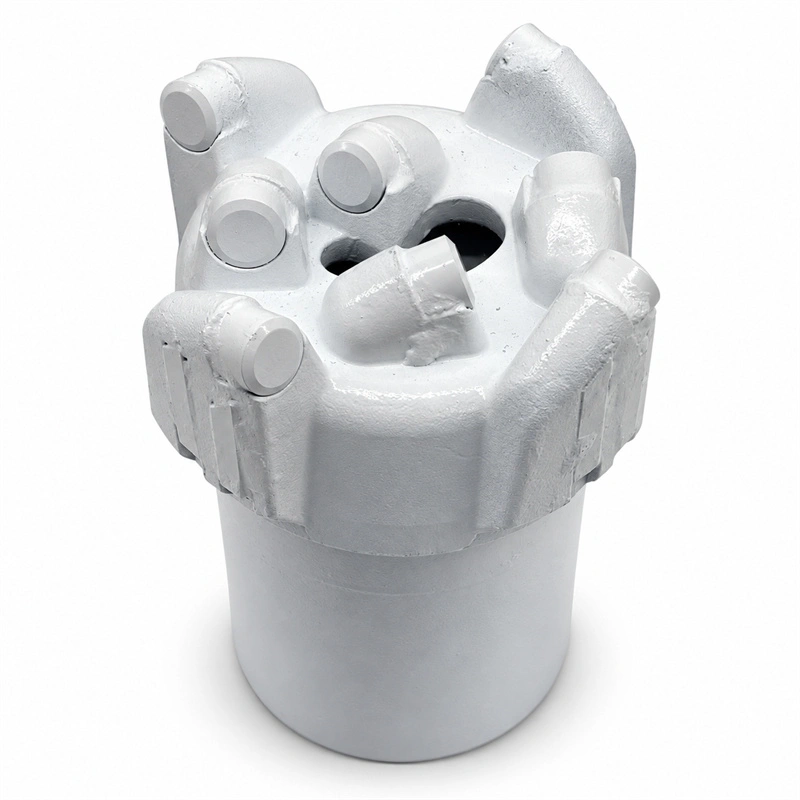 Before Drilling
New 91 mm flat-top PDC bit with 7 × 1308 cutters, before field use.
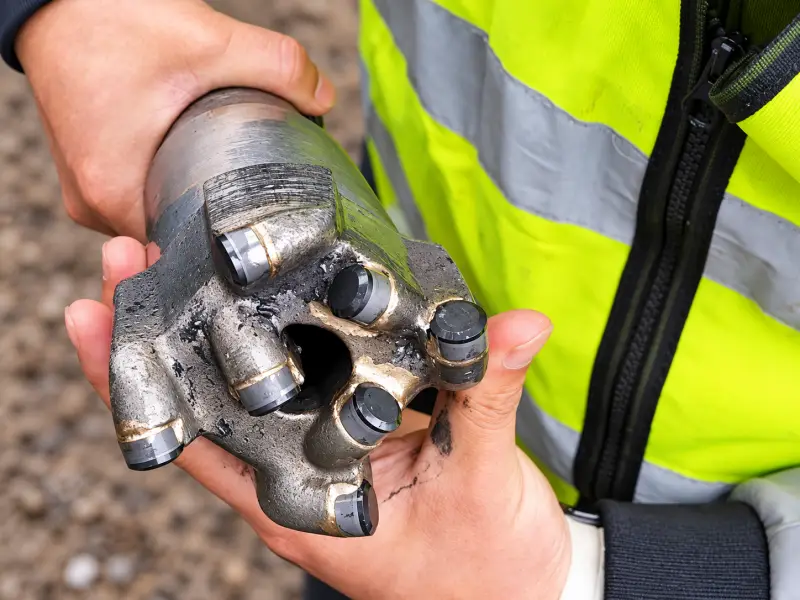 After 100 m
The same bit after about 100 m of drilling — pulled for inspection and wear analysis.
Basic Project Information
| Item | Detail |
|---|---|
| Bit type | Flat-top non-coring PDC drill bit |
| Diameter | 91 mm |
| Drilling interval | About 100 m |
| PDC cutter type | 1308 (super petroleum-grade PDC) |
| Cutter quantity | 7 main PDC cutters |
| Drilling method | Rotary drilling |
| Bit function | Full-face drilling without core recovery |
| Typical rock range | Selected soft to medium-hard sedimentary formations |
This type of bit is often used for:
- Grouting holes
- Water-well drilling
- Gas drainage holes
- Geothermal drilling
- Construction drilling
- Engineering boreholes
Real performance depends on the rock, rig, RPM, feed pressure, flushing and cutter grade.
Why Use a Flat-Top PDC Bit?
Flat-top PDC bits have a fairly simple fixed-cutter design. Unlike PDC core bits, they do not leave a central rock core. Instead, the cutters remove rock across the full bottom of the hole.
Because of this, they suit jobs where the main goal is:
Efficient hole advance, not rock-core recovery.
In suitable rock, the PDC cutters shear the rock as the bit turns. Compared with crushing-type drilling, this shearing action can give fast penetration and steady drilling when the cutting structure is matched to the rock.
Why 91 mm?
The 91 mm diameter works well in many small and medium engineering jobs. Compared with larger bits, a 91 mm PDC bit usually needs less torque and allows a fairly compact cutting structure.
This size is often picked when contractors need:
- Smaller borehole diameter
- Lower rig load
- Efficient rotary drilling
- Simple bit structure
- Easy fit with common drill rods and connections
The right diameter still depends on the project design.
1308 PDC Cutters in This Bit
The bit in this case used 1308 PDC cutters, made with super petroleum-grade PDC. For smaller PDC tools, this cutter size gives a useful balance between:
- Cutting efficiency
- Wear resistance
- Cutter strength
- Compact cutter layout
The 91 mm structure uses several cutters placed so their cutting paths overlap across the bottom of the hole. This helps keep full-face rock removal.
Even so, cutter count alone does not decide performance. The position, angle and load spread of each cutter matter just as much.
What Happens During 100 Meters of Drilling?
During drilling, each PDC cutter is exposed to:
- Rock contact
- Friction
- Heat
- Abrasive particles
- Axial load
- Torque
- Vibration
Even in fairly suitable rock, the cutting structure changes bit by bit as drilling goes on. Because of this, a used bit is worth studying. After 100 meters, it can give clues about:
- Rock abrasiveness
- Drilling stability
- Cutter load
- Gauge condition
- Flushing effect
In short, a new bit tells us how it was made. A used bit tells us how it worked.
First Inspection: Are the PDC Cutters Still Secure?
The first thing to check is cutter retention. Each cutter should stay firmly fixed in its design spot. If a cutter is lost during drilling, nearby cutters may suddenly carry a much higher load.
This can start a chain:
Cutter loss → Load imbalance → More vibration → Extra cutter damage
Because of this, cutter attachment quality matters a lot. Good retention after the drilling interval shows the cutter pocket and joint held stable under real load.
Second Inspection: Cutter Wear Pattern
Not all wear is a problem. PDC cutters are expected to wear during normal drilling. The key question is: how did they wear?
Fairly even wear across the cutters usually points to balanced drilling. However, some patterns may look odd:
- Heavy wear on one side
- Chipped edges
- Cracked cutters
- Large wear flats
- Uneven wear between neighbors
These patterns can give clues about downhole conditions.
What Does Cutter Chipping Mean?
A chipped PDC cutter does not always mean the cutter itself is bad. Possible causes include:
- Fractured rock
- Hard inclusions
- Downhole metal debris
- Heavy vibration
- Sudden rock changes
- Too much feed pressure
- Unstable drill string
Because of this, makers should not judge cutter damage from photos alone. Drilling conditions also need to be reviewed.
Flat-Top PDC Bit in Limestone
PDC bits can work well in suitable limestone. However, limestone varies a lot. Important factors include:
- Compressive strength
- Abrasiveness
- Silica content
- Fracture state
- Bedding
- Uniformity
Fairly uniform limestone may allow smooth PDC cutting. On the other hand, fractured limestone can cause repeated impact and raise the risk of cutter chipping.
So the question should not be: can PDC drill limestone? A better question is: what type of limestone will the bit drill?
Performance in Sandstone
Sandstone brings a different challenge. Some sandstone is fairly easy to cut. Other sandstone holds a lot of quartz and wears the bit fast.
In abrasive sandstone, wear may rise around:
- Cutter edges
- Shoulder area
- Gauge section
- Steel body
For these conditions, cutter grade and wear protection may matter more than top initial penetration. In short, the fastest bit at the start is not always the one that gives the lowest total drilling cost.
Mudstone and Shale: Watch for Bit Balling
Mudstone and shale can make sticky cuttings. If these cuttings build up around the cutters, the bit face may slowly get covered. This is often called bit balling.
Typical signs include:
- Sudden drop in penetration
- Higher torque
- Weak cuttings return
- Unstable drilling
The problem may not be cutter wear. It may simply be weak cleaning. Because of this, good flushing is key.
Why Flushing Matters
A PDC bit needs to do two things at the same time: cut rock, and remove the broken rock.
If cuttings stay under the bit, the cutters begin regrinding material that was already broken. This wastes drilling energy. Good flow helps:
- Cool the cutters
- Clean the bit face
- Remove cuttings
- Reduce recutting
- Reduce bit balling
For flat-top PDC bits, waterway design should give enough open area for the rock and the drilling fluid being used.
Gauge Wear After 100 Meters
The gauge section keeps the outside diameter of the hole. After a 100 m interval, this area should be checked with care.
Heavy gauge wear can make the bit undersize. That may cause problems when:
- Continuing the hole
- Installing casing
- Running other drilling tools
- Keeping the required hole size
In abrasive rock, stronger gauge protection may be needed.
Body Wear Also Matters
Customers often focus only on the PDC cutters. However, the steel body also wears. Key areas include:
- Blade edges
- Shoulder
- Gauge
- Waterways
- Cutter-supporting surfaces
If the steel around the cutters wears too fast, cutter support may get weaker even when the diamond surface itself is still usable. This is why wear protection and body design are part of overall bit performance.
What Can Be Learned From a Used Bit?
A used bit can help improve the next tool. For example:
| Used-Bit Sign | Possible Meaning |
|---|---|
| Even cutter wear | Steady load, fairly balanced drilling |
| Chipped cutters | Impact, vibration or fractured rock |
| Heavy gauge wear | Abrasive borehole wall |
| Uneven wear | Load imbalance or unstable drilling |
| Material packed on face | Weak flushing or sticky rock |
| Heavy body erosion | Abrasive cuttings or fast fluid flow |
These are clues, not fixed answers. Rock data should always be read together with the wear pattern.
Is One Bit Expected to Drill Exactly 100 Meters?
No. A PDC bit should never be promoted with a fixed claim like: “this bit always drills 100 meters.” Real life can vary a lot.
A bit may drill much farther in a suitable uniform rock. On the other hand, the same bit may wear much faster in abrasive or fractured ground. Bit life depends on:
- Rock type
- Cutter quality
- Cutter layout
- Rig
- RPM
- Weight on bit
- Flushing
- Vibration
- Operator skill
So this 100 m case should be seen as a field example, not a universal promise.
When Should the Bit Be Replaced?
A bit does not always need to be replaced just because it has drilled a certain number of meters. Replacement should be based on condition and performance. Typical signs include:
- Big cutter damage
- Heavy gauge loss
- Fast drop in penetration
- Unsteady torque
- Heavy vibration
- Serious body wear
If the cutting structure is still in good shape, the bit may keep drilling, depending on the project needs.
How to Improve the Next 91 mm PDC Bit
If a used bit shows odd wear, the next design can be adjusted. Possible changes may include:
- Different PDC cutter grade
- Changed cutter exposure
- Extra cutter protection
- Better gauge reinforcement
- Changed waterway shape
- Stronger wear protection
- Changed cutter layout
The right change depends on what caused the wear. Because of this, we suggest saving used-bit photos rather than throwing the bit away without a look.
Recommended Information for PDC Bit Selection
Before ordering a flat-top PDC bit, please give as much of the following as you can:
| Item | Example |
|---|---|
| Borehole diameter | 91 mm |
| Target depth | 100 m |
| Rock type | Limestone, sandstone, mudstone, shale, coal, dolomite |
| Application | Water well, grouting, gas drainage, geothermal, engineering |
| Connection | Required thread or drawing |
| Rig info | Rig model, torque, RPM |
| Used-bit photos | Especially useful if the current bit has been run |
Other Flat-Top PDC Bit Sizes
Flat-top PDC bits can be made in different sizes to drilling needs. Typical sizes include:
Different cutter setups can be used by diameter and rock. For custom projects, the bit setup should be confirmed against the real drilling job.
Why Field Photos Matter
One big gap between a catalogue and a real drilling case is evidence. A factory photo proves a bit exists. A used-bit photo shows the bit has actually worked underground.
For drilling contractors, photos after field use can give useful data about:
- Cutter condition
- Body life
- Gauge wear
- Bit structure
- Drilling environment
This makes real field notes very useful for both makers and customers.
Real Drilling Conditions. Real Bit Performance.
Chenghui — PDC bits matched to the formation, proven in the borehole.
Super petroleum-grade cutters. Real wear data. Field photos, not just factory shots.
Frequently Asked Questions
What should I check on a PDC bit after drilling?
Check cutter retention first, then cutter wear, chipping, blade and body wear, gauge condition and waterway state. In short, look at how the bit worked, not just how it looks.
Does a chipped cutter always mean a bad bit?
No. Chipping can come from fractured rock, hard inclusions, downhole debris, heavy vibration, sudden rock changes or too much feed. Drilling conditions should always be checked along with the cutter.
Does a 100 m case mean the bit always drills 100 m?
No. Bit life can vary a lot. A bit may drill much farther in uniform rock, or wear faster in abrasive or fractured ground. This 100 m case is a field example, not a fixed promise.
When should I replace a PDC bit?
Replace it based on condition, not just meters. Look for big cutter damage, heavy gauge loss, a fast drop in penetration, unsteady torque, heavy vibration or serious body wear.
What information should I send for a PDC bit quote?
Send diameter, target depth, rock type, application, connection and rig model. Photos of used bits also help a lot, because they show real wear, load pattern and rock behavior.
Need a 91 mm or other flat-top PDC bit for grouting, water wells, gas drainage or geothermal work? Send us your diameter, depth and rock type. Our team will recommend a suitable setup.
Share your rig model, thread connection and flushing method. Photos of used bits are also very useful for accurate selection.