
Technical Reference for Water Well, Geothermal, Mining, HDD and Exploration Drilling
Quick Answer
PDC drill bit applications include water well drilling, geothermal boreholes, geological exploration, mining and selected horizontal directional drilling projects. Drilling teams also use application-specific PDC bits in certain oil and gas projects when the formation and drilling system support fixed-cutter shearing. The appropriate bit depends on the formation, drilling system, and project requirements. Application-specific selection is essential.
Introduction
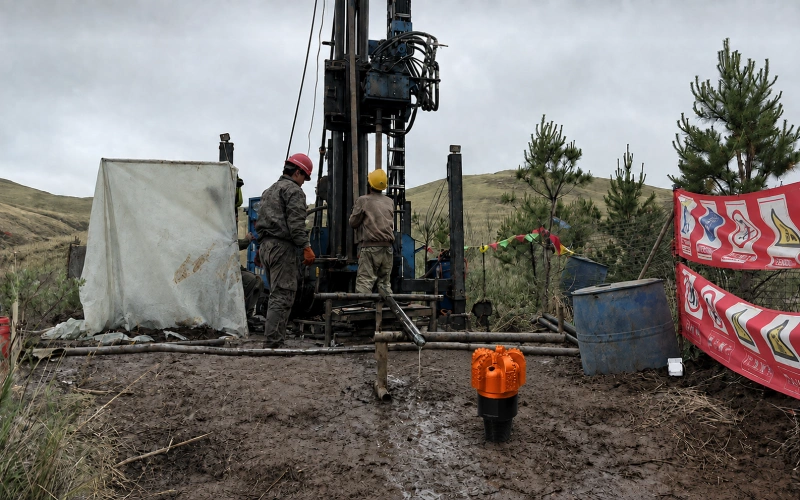
Polycrystalline diamond compact (PDC) drill bits use fixed cutters to serve several drilling industries. Common PDC drill bit applications include water well construction, geothermal drilling, horizontal directional drilling, geological exploration, mining and selected oil and gas projects.
However, a PDC bit that performs well in one formation may not be suitable for another. Performance depends on formation characteristics, bit design, drilling parameters, and equipment compatibility. This guide outlines the main applications and selection considerations for each.
What Is a PDC Drill Bit?
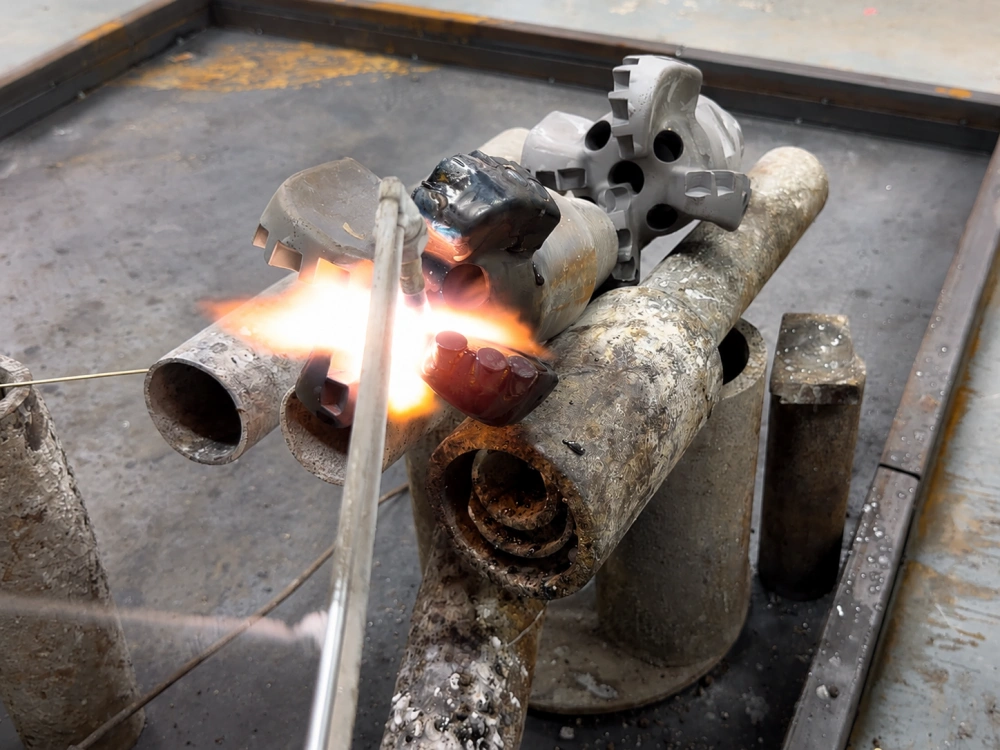
A PDC drill bit is a fixed-cutter drilling tool fitted with polycrystalline diamond compact cutting elements. Each PDC cutter typically combines a synthetic diamond layer with a tungsten carbide substrate. As the bit rotates, the cutters remove rock primarily through a shearing action, which differs from the crushing and gouging action of roller-cone (tricone) bits.
Design features that influence performance include blade count, cutter size and placement, bit profile, gauge protection, body material, fluid passages, and connection type. Engineers should select these features according to the application and formation. For more information on available configurations, see our range of PDC drill bit designs.
Applications at a Glance
| Application | Typical Drilling Task | Main Bit Consideration |
|---|---|---|
| Water Wells | Domestic, agricultural and municipal water supply wells | Formation compatibility, cuttings removal, connection type |
| Geothermal Drilling | Ground-source heat pump boreholes, geothermal wells | Temperature resistance, cutter durability, cooling, vibration |
| Horizontal Directional Drilling | Pipeline, utility and cable installation | Steering system compatibility, borehole stability, tooling |
| Geological Exploration | Rock sampling, core recovery, groundwater investigation | Core quality, sample integrity, recovery rate |
| Mining and Coal Seam Drilling | Gas drainage, exploration, support, grouting | Formation transitions, borehole stability, operating conditions |
| Oil and Gas Drilling | Vertical, directional and horizontal well sections | Bit profile, hydraulics, directional performance, assembly |
In practice, actual suitability depends on rock strength, abrasiveness, fracturing, drilling equipment, borehole geometry and operating practices. This table provides general guidance and is not a substitute for application-specific engineering evaluation.
PDC Drill Bits for Water Well Drilling
Water well contractors commonly use suitable PDC drill bits for water well drilling in domestic, agricultural, and municipal well projects.
Depending on local geology, water well drillers may encounter clay, mudstone, shale, red sandstone, consolidated sandstone, limestone, weathered rock, and mixed sedimentary layers. In suitable formations, a PDC bit can provide efficient shearing action without the moving cone assemblies found in tricone bits.
However, the correct bit depends on more than the formation name. Two sandstone formations can behave very differently if their cementation, quartz content, compressive strength, or abrasiveness differ.
Before selecting a bit, water well contractors should consider the expected formation sequence, required borehole diameter, drilling method and circulation medium, available rig torque and rotation speed, bit connection and drill string compatibility, potential changes from soft ground into harder or fractured layers, and hole cleaning and cuttings transport.
Contractors often consider three-wing and four-wing PDC drag bits for suitable soft-to-medium formations and water well applications. For more demanding intervals, contractors should match the blade structure, cutter placement, and gauge protection to the actual ground conditions. For detailed formation-specific guidance, see our PDC drill bit selection guide for different rock formations.
Typical considerations: A water well project passing through mudstone and moderately consolidated sandstone may be a reasonable candidate for a suitably designed PDC bit. If the same borehole enters fractured hard rock or loose cobbles, the contractor may need to reassess the bit type and drilling method.
PDC Drill Bits for Horizontal Directional Drilling
Contractors use horizontal directional drilling (HDD) to install underground pipelines, cables, and utility conduits with limited surface excavation. Contractors may use PDC cutting tools in selected HDD applications when the drilling system and formation characteristics support fixed-cutter drilling.
Potential HDD applications include water pipeline installation, gas pipeline installation, telecommunications conduit placement, electrical utility crossings, road and river crossings, and directional boring through suitable consolidated rock.
Bit selection for HDD must account for more than rock hardness. Steering requirements, drill head compatibility, bore length, torque, fluid flow, and the difference between consolidated and fractured formations all influence the tooling decision. In suitable HDD applications, contractors may consider a PDC cutting tool or hole opener for consolidated formations. By contrast, fractured or highly variable ground conditions may require a different tooling configuration.
Not every PDC water well bit is suitable for HDD. HDD applications may require a drill head, mud motor, dual-rod system, hole opener, or steering arrangement designed specifically for directional work.
A directional crossing through relatively consistent, consolidated rock may support a suitable PDC cutting tool. If the route contains heavily fractured rock, unstable transitions, or significant cobble content, a different tooling configuration may be more appropriate.
PDC Drill Bits for Geothermal Drilling
Geothermal drilling covers a wide range of projects, from shallow ground-source heat pump boreholes to deeper geothermal wells. These applications differ significantly in drilling depth, downhole temperature, rock strength, and equipment requirements.
Contractors may consider PDC bits for shallow geothermal boreholes that pass through suitable sedimentary formations in a manner similar to water well drilling.
Deeper geothermal projects can present additional challenges: elevated downhole temperatures, hard igneous or metamorphic rock, abrasive minerals, natural fractures, cutter impact loading, drilling vibration, and thermal degradation of cutting elements. The U.S. Department of Energy explains that early PDC bit applications focused mainly on softer formations, while improvements in bit design and manufacturing have expanded their use into harder formations encountered in geothermal drilling.
Specialized geothermal PDC bits may incorporate enhanced cutter thermal stability, impact resistance, and cutting structures designed for high-strength formations. However, contractors should not expect every standard PDC drag bit to provide these capabilities.
For geothermal projects, relevant selection factors include expected temperature range, rock type and rock strength, fracture density, abrasiveness, available drilling fluid and cooling, rig torque and weight-on-bit capability, vibration management, and cutter and bit-body durability.
Important: Engineers should not automatically specify a standard water well PDC drag bit for deep, high-temperature or fractured hard-rock geothermal drilling.
PDC Core Drill Bits for Geological Exploration
Geological exploration often requires more than creating a borehole. In many projects, the goal is to recover a physical rock sample that provides information about subsurface geology. A core drill bit cuts an annular path around a central rock core, allowing the sample to enter a compatible core barrel.
Exploration contractors may consider PDC core drill bits for geological exploration for suitable applications such as geological investigation, groundwater exploration, rock sampling, engineering geology, hydrological investigation, and selected mineral exploration programs.
Depending on bit design and geological conditions, relevant formations may include limestone, dolomite, mudstone, shale, sandstone, and certain weathered or medium-hard rock intervals. The U.S. Geological Survey identifies drill core as an important source of subsurface lithological information and physical material for sampling and analysis.
However, a formation name alone does not guarantee that a PDC core bit is appropriate. In addition, very hard, highly abrasive or strongly fractured formations may require a different coring technology, such as an impregnated diamond bit, depending on core recovery requirements and drilling conditions.
When selecting a PDC core bit, consider required core diameter, core barrel compatibility, expected recovery quality, formation strength and abrasiveness, fracturing and sample integrity, water circulation and cuttings removal, and thread connection and equipment compatibility.
For exploration contractors, the most appropriate bit is not simply the one that drills fastest. It is the one that balances penetration, core recovery, sample condition, and operating cost.
PDC Drill Bits for Mining and Coal Seam Drilling
Coal mining operations use boreholes for several purposes, including geological investigation, gas drainage, support-related drilling, and other mine-development activities. Depending on the site and equipment, PDC drill bits for mining and coal seam drilling may be considered for coal seam drilling, methane drainage boreholes, gas drainage holes, exploration boreholes, selected anchor or support boreholes, grouting holes, and drilling through associated shale or mudstone layers.
Coal seams may be relatively soft, but the surrounding strata can change quickly. A borehole may pass between coal, shale, mudstone, sandstone, or harder inclusions. As a result, cutter configuration, bit stability, circulation and resistance to formation transitions become important.
CDC/NIOSH materials describe the use of vertical, horizontal, and directional coalbed gas-drainage boreholes as part of mine methane management. However, mine safety depends on the entire engineering system, including borehole design, ventilation, monitoring, operating procedures, and regulatory compliance—not on the drill bit alone.
A technically accurate claim is that an appropriate drill bit can support the drilling of gas drainage boreholes. It would not be accurate to state that a PDC bit alone eliminates gas hazards or guarantees safer mining conditions.
A PDC bit designed for coal and associated shale may perform appropriately in a planned gas drainage borehole. If the borehole intersects highly fractured rock or unexpected hard bands, the drilling team should review the cutting structure and operating parameters.
PDC Drill Bits for Oil and Gas Applications
PDC bits are widely used in oil and gas drilling, including vertical, directional, and horizontal well sections. Common applications include drilling through suitable shale, sandstone, limestone, carbonate formations, and interbedded sedimentary sequences.
Drilling engineers typically select oilfield PDC bits using detailed formation data, well objectives, drilling system characteristics, and directional requirements. Important design considerations can include bit profile, blade count, cutter size and cutter density, back rake and side rake, hydraulic nozzle arrangement, gauge length and gauge protection, vibration behavior, and compatibility with downhole motors or rotary steerable systems.
Oilfield applications can involve demanding operating conditions and more specialized bit designs than typical shallow water well or general-purpose drag-bit applications. Therefore, a product suitable for water well drilling should not automatically be described as suitable for every oilfield environment.
Where PDC Bits May Not Be the Best Choice
While PDC drill bits are versatile, they are not suitable for all conditions. In practice, alternative bit types or drilling methods may perform better under some conditions. Situations where PDC bits may have limitations include:
- Highly fractured rock — Impact loading can damage cutters.
- Loose gravel or cobbles — Moving material can cause cutter impact and uneven loading.
- Severe impact loading — Can damage PDC cutters, particularly when the bit design is not matched to fractured or inconsistent formations.
- Unexpected hard stringers — Hard bands within softer formations can cause cutter wear or damage.
- Extremely abrasive formations — High quartz content can accelerate cutter wear.
- Deep high-temperature environments — Without suitable bit design, thermal degradation may occur.
The appropriate drilling tool depends on formation conditions, equipment, and project requirements. A thorough evaluation of the expected ground conditions and drilling system is essential before selecting any bit type.
Information Required for PDC Bit Selection
To assist with a PDC bit recommendation, provide the following information:
- Drilling application
- Required bit diameter
- Formation type and geological conditions
- Planned drilling depth
- Rig model or available torque
- Rotation speed, if available
- Circulation method, such as water, drilling fluid, mud or air
- Thread connection
- Whether core recovery is required
- Photos of previously used bits, if available
Selected Chenghui PDC bit configurations are available in sizes from 75 mm to 325 mm, depending on product design and application requirements.
Providing these details helps narrow the selection to a more appropriate cutting structure for the specific application.
Frequently Asked Questions
Application Questions
What are PDC drill bits used for?
Are PDC bits suitable for water well drilling?
Can PDC drill bits be used in geothermal wells?
Are PDC bits suitable for horizontal directional drilling?
Bit Selection Questions
What is the difference between a PDC drag bit and a PDC core bit?
Can PDC bits drill hard or fractured rock?
What information is needed to recommend a PDC drill bit?
References and Public Technical Sources
Send us your drilling application, bit diameter, formation details, drilling method and thread requirements. Our team can review your project information and help identify a suitable PDC bit configuration.
The final selection should reflect the actual formation conditions, drilling equipment and operating requirements.