
How to Choose the Right Hot-Pressed Diamond Core Bit for Geological Drilling
Everything You Need to Know About Wireline Diamond Core Bits, Matrix Selection, Rock Formations and Drilling Performance
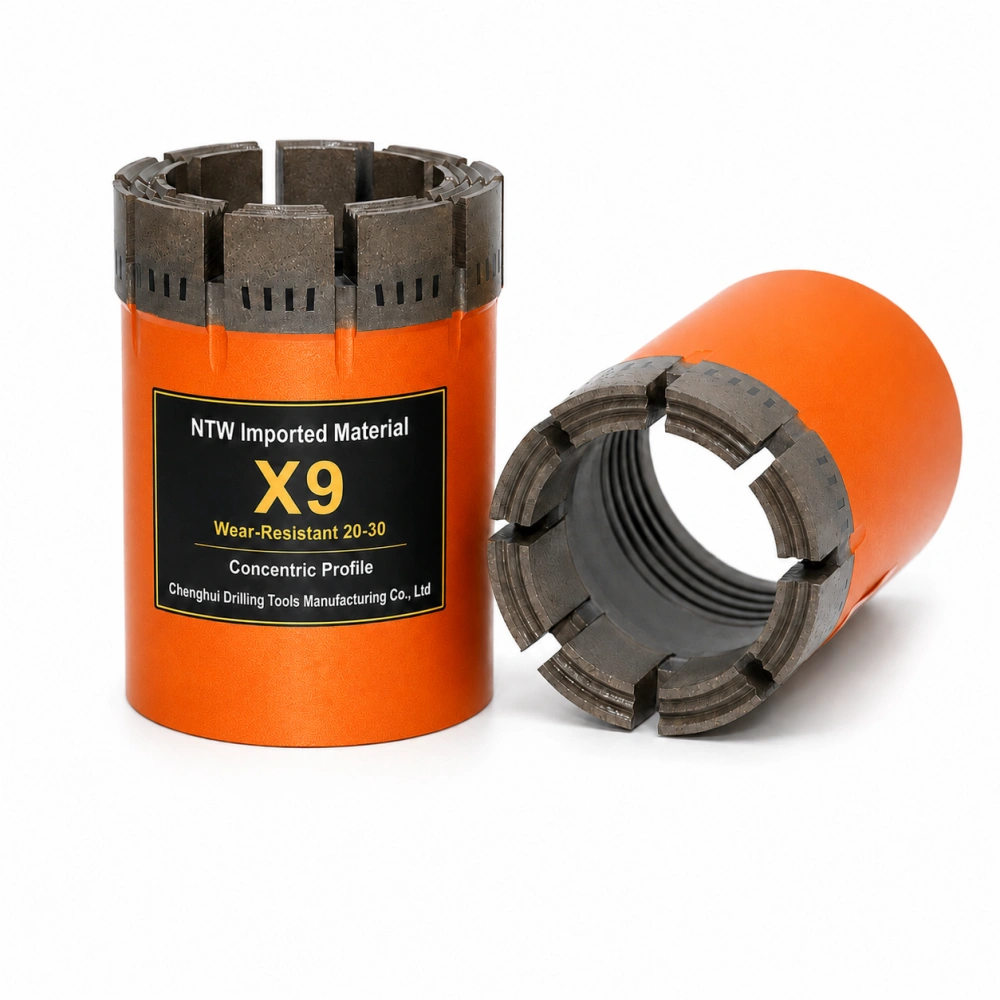
Introduction
Why does one diamond bit drill 800 meters while another barely reaches 300 meters in the same formation? The answer is rarely about the brand name on the box. It is about matrix selection.
For drilling contractors, geological exploration teams, and mining engineers, the diamond core bit is the most critical tool in the borehole. Yet many buyers focus on price or reputation, ignoring the single factor that truly determines performance: how the bit is engineered for the rock it will cut.
This guide is not a product catalog. It is a technical reference to help you choose the right hot-pressed diamond core bit for your drilling project. Whether you are drilling in hard granite, fractured limestone, or loose sand formations, the principles explained here will help you improve core recovery, extend bit life, and reduce cost per meter.
Max bit life potential
Core recovery rate
Countries served
Years manufacturing experience
Table of Contents
What Is a Hot-Pressed Diamond Core Bit?
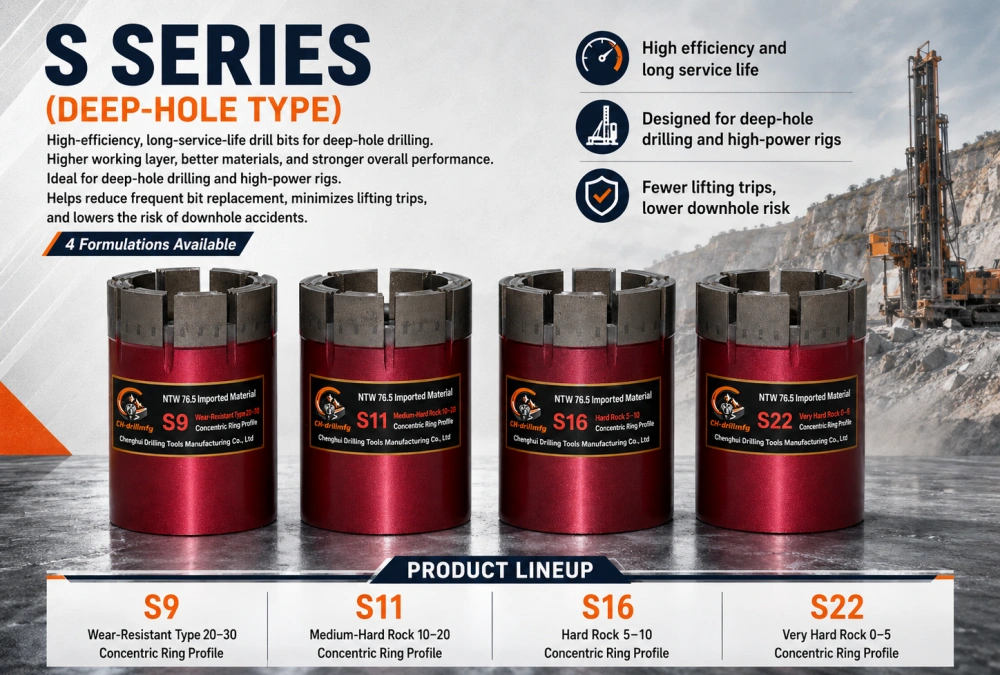
A hot-pressed diamond core bit is a precision-engineered drilling tool designed to extract cylindrical rock samples from the subsurface. Unlike surface-set diamond bits, hot-pressed bits embed synthetic diamonds uniformly throughout a metal matrix using high-temperature and high-pressure pressing technology.
Key Components
Matrix
A metal bond that holds diamonds in place. Matrix hardness determines diamond exposure rate.
Diamond Segment
The cutting crown where synthetic diamonds are embedded for rock cutting.
Self-Sharpening
As matrix wears, new diamond crystals are exposed, maintaining cutting efficiency.
Wireline Coring
Inner tube retrieval without pulling drill string — reduces tripping time significantly.
How Does a Hot-Pressed Diamond Core Bit Work?
As the drill string rotates, the diamond segment contacts the rock surface. The exposed diamonds cut and grind the formation, creating a cylindrical annulus. The core sample enters the inner tube while cuttings are flushed upward by drilling fluid.
The hot-pressed manufacturing process ensures consistent diamond distribution. As the matrix wears, new diamonds are continuously exposed—a property known as self-sharpening. This mechanism allows the bit to maintain penetration rates over long intervals, making it ideal for deep-hole coring.
Key Insight: For wireline diamond core bits, the inner barrel can be retrieved through the drill string, significantly reducing the time required to recover core samples. This makes wireline coring the preferred method for deep geological drilling projects.
Advantages of Hot-Pressed Diamond Core Bits
High Core Recovery
Consistent diamond exposure and stable cutting action improve core recovery rates in both hard and broken formations.
Long Service Life
Premium synthetic diamonds and optimized matrix formulations extend bit life in abrasive geological conditions.
Excellent Wear Resistance
Hot-pressed diamond segments resist wear in hard, abrasive rock formations, maintaining cutting efficiency.
High Drilling Efficiency
Self-sharpening maintains ROP, reducing non-productive time and improving overall drilling economics.
Excellent Stability
Consistent cutting action reduces vibration and improves borehole quality for deep exploration drilling.
Suitable for Deep Hole Drilling
Wireline system minimizes tripping, enabling deep exploration and reducing overall drilling time.
Applications include geological exploration, mineral exploration, engineering investigation, hydropower survey, tunnel investigation, coal exploration, metal mining, and geotechnical investigation. The versatility of diamond core bits makes them indispensable in modern drilling operations.
Common Wireline Core Bit Sizes
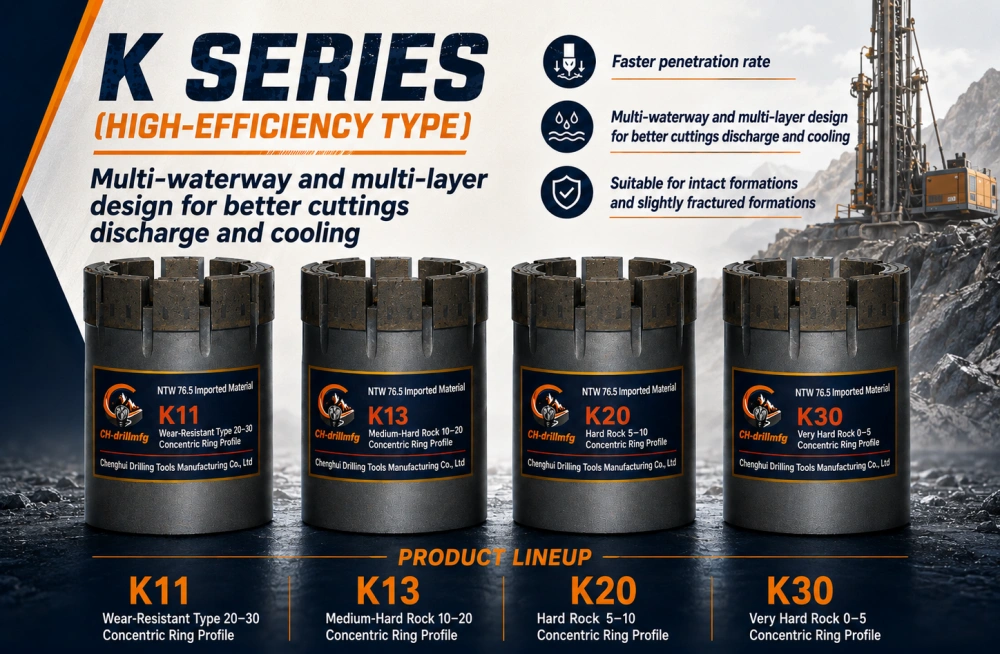
Understanding standard wireline core bit sizes is essential for selecting the right tool for your drilling project. The most common sizes are AQ, BQ, NQ, HQ, and PQ, with each size designed for specific core diameter and application requirements.
| Size | Outside Diameter (mm) | Inside Diameter (mm) | Common Use |
|---|---|---|---|
| AQ | 48.0 | 27.0 | Small diameter, shallow holes |
| BQ | 59.6 | 36.4 | Mineral exploration, shallow |
| NQ | 75.3 | 47.6 | Standard exploration, mid-depth |
| NQ3 | 75.3 | 45.1 | Larger core, mid-depth |
| HQ | 95.6 | 63.5 | Deep exploration, large core |
| HQ3 | 95.6 | 61.1 | Deep drilling, larger core |
| PQ | 122.0 | 85.0 | Very deep, large diameter |
| PQ3 | 122.0 | 83.1 | Very deep, max core size |
| NTW | 75.5 | 56.0 | Geotechnical, water well |
| HTW | 95.5 | 71.0 | Geotechnical, deep water well |
Common sizes like NQ diamond bit and HQ diamond bit are widely used in mineral exploration, while PQ diamond bit and AQ diamond bit are selected for specialized applications based on core size requirements.
Applications
Essential for deep coring in mineral and geothermal exploration with reduced trip frequency.
Obtains representative rock samples for stratigraphic analysis and mineral assessment.
Common in base metal, precious metal, and uranium exploration programs.
Supports foundation design, slope stability, and infrastructure projects.
Used for dam site investigation and tunnel alignment studies.
Provides geotechnical data for tunnel design and construction.
For coal seam evaluation and geotechnical analysis in mining operations.
Used in underground exploration and grade control drilling.
Supports civil engineering and environmental site assessments.
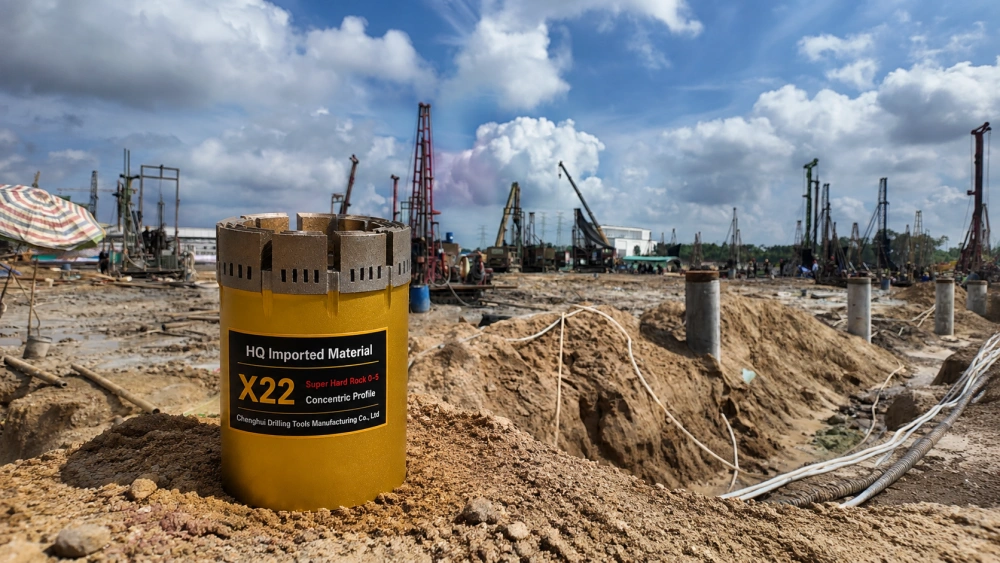
Suitable Rock Formations
Soft Formation
Clay, mudstone, shale — requires softer matrix for aggressive cutting.
Medium Formation
Sandstone, limestone — balanced matrix with moderate wear resistance.
Hard Formation
Granite, basalt, quartzite — requires softer matrix to expose diamonds.
Broken Formation
Fractured zones — needs stability and bottom spray design.
Sand Formation
Loose sand — bottom spray improves flushing and core recovery.
Highly Abrasive Formation
Quartz-rich rock — requires premium diamonds and optimized matrix.
Matrix Hardness Selection Guide
Matrix selection is the single most important decision when choosing a diamond core bit. The matrix hardness determines how quickly the bond wears to expose fresh diamonds. A mismatched matrix can lead to premature bit failure or low penetration rates.
| Matrix Type | Formation | Recommended Use | Wear Rate |
|---|---|---|---|
| Low Matrix (Soft) | Hard Rock (Granite, Basalt) | Exposes diamonds quickly for fast cutting | Fast wear |
| Medium Matrix | Medium Rock (Sandstone, Limestone) | Balanced performance for mixed formations | Moderate wear |
| High Matrix (Hard) | Soft Rock (Clay, Mudstone) | Resists premature wear, extends bit life | Slow wear |
Why does hard rock require a soft matrix? In hard formations, diamonds wear quickly. A soft matrix wears faster, exposing fresh diamonds continuously to maintain penetration. In soft formations, a hard matrix prevents diamonds from being exposed too quickly, extending bit life and reducing cost per meter.
Bottom Spray Hot-Pressed Diamond Core Bit
A bottom spray diamond core bit features strategically placed water ports at the bit face to improve flushing and cooling. This design is critical in challenging drilling conditions:
Loose Sand
Prevents bit balling and improves cuttings removal for efficient drilling.
Broken Formation
Reduces core washout and improves recovery in fractured zones.
Low Core Recovery
Enhances flushing to retain core samples and improve data quality.
Bottom spray reduces the risk of bit burning and extends bit life in challenging drilling conditions, making it an essential feature for many geological drilling projects.
How to Choose the Right Diamond Core Bit
Selecting the correct diamond core bit requires a systematic approach. Follow these 6 steps to ensure optimal performance:
Select AQ, BQ, NQ, HQ, PQ based on core diameter and rig capacity. Consider the required core sample size for your exploration program.
Hard rock = soft matrix; soft rock = hard matrix. This is the most critical decision for bit performance.
Standard or bottom spray based on formation and flushing requirements. Bottom spray recommended for broken formations.
Essential for loose sand, broken formations, and low recovery zones to improve flushing and core recovery.
Confirm thread type (e.g., API, metric) compatible with your drill string and core barrel.
Always match bit design to formation for optimal performance and cost efficiency.
Operating Tips
To maximize the life and performance of your hot-pressed diamond core bit, follow these operating guidelines:
Weight on Bit (WOB)
Adjust based on formation. Excessive WOB increases wear; too little reduces penetration.
RPM
Match RPM to bit size and formation. High RPM in hard rock can cause glazing.
Water Flow
Ensure sufficient flow for flushing and cooling. Insufficient flow leads to bit burning.
Cooling
Insufficient cooling leads to bit burning and matrix damage. Monitor temperature.
Pressure
Maintain consistent pressure for stable core recovery and reduced vibration.
Bit Inspection
Regularly inspect for wear, glaze, and damage to avoid costly failures and downtime.
Common Drilling Problems
| Problem | Cause | Solution |
|---|---|---|
| Bit Burning | Insufficient cooling / high RPM | Increase water flow, reduce RPM |
| Rapid Wear | Wrong matrix / excessive WOB | Adjust matrix hardness, reduce WOB |
| Poor Core Recovery | Flushing too high / broken formation | Reduce flow, use bottom spray |
| Bit Glazing | Insufficient WOB / hard matrix | Increase WOB, use softer matrix |
| Broken Crown | Impact loading / poor drilling technique | Reduce WOB, check alignment |
| Low Penetration | Glazed bit / worn diamonds | Recondition or replace bit |
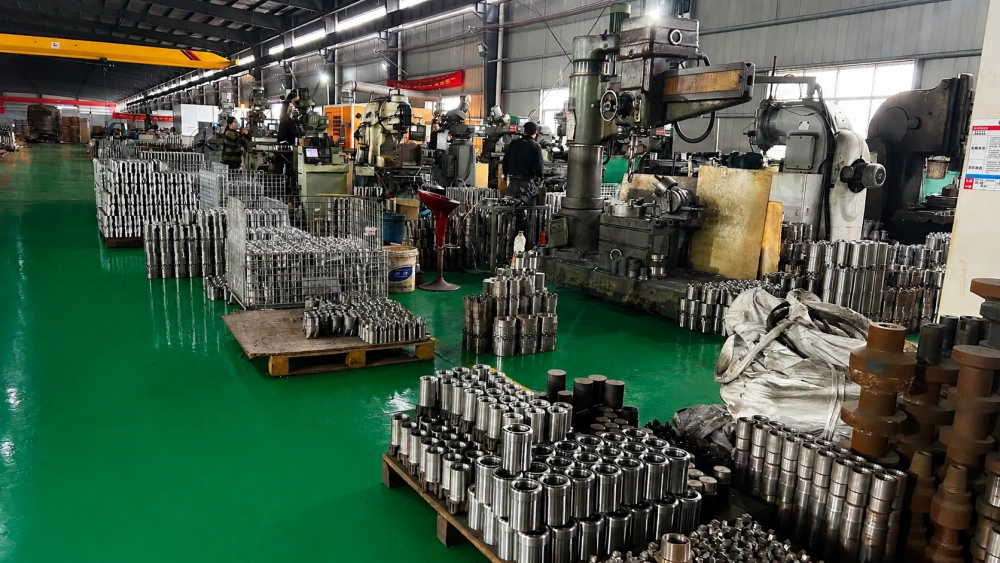
Why Choose Chenghui Drilling Tools
Chenghui Drilling Tools Manufacturing Co., Ltd. has over 20 years of experience in diamond core bit manufacturing and supply. We are a trusted diamond bit manufacturer serving clients worldwide.
OEM & Customization
Customized matrix, size, and thread to match your drilling requirements.
Strict QC
Every bit undergoes rigorous quality control before shipment.
Professional Engineers
Technical support for bit selection, troubleshooting, and optimization.
Global Export
Serving clients in over 30 countries with reliable delivery.
20+ Years
Manufacturing experience and industry expertise.
OEM Service
Private labeling and customized packaging available.
Frequently Asked Questions
Q: What is a Hot Pressed Diamond Core Bit?
A hot-pressed diamond core bit is a drilling tool with synthetic diamonds embedded in a metal matrix using high-temperature pressing. It is used for wireline coring in geological and mineral exploration.
Q: What is Wireline Coring?
Wireline coring is a system where the inner core barrel is retrieved using a wireline cable without pulling the entire drill string, significantly reducing trip time.
Q: How to choose Matrix?
Hard rock requires a soft matrix; soft rock requires a hard matrix. The matrix controls diamond exposure and bit life.
Q: What is Bottom Spray?
Bottom spray refers to water ports located at the bit face to improve flushing, cooling, and core recovery in loose or broken formations.
Q: Which Matrix is suitable for Granite?
For granite, use a soft matrix to expose diamonds quickly and maintain penetration rates.
Q: How long does a Diamond Bit last?
Bit life varies with formation, operating parameters, and matrix selection. In ideal conditions, a hot-pressed bit can drill 200–800 meters.
Q: What drilling fluid should I use?
Water with drilling mud or polymer additives is commonly used for cooling, flushing, and borehole stability.
Q: Can I customize AQ BQ NQ HQ PQ?
Yes, Chenghui provides customized sizes, matrices, and threads for AQ, BQ, NQ, HQ, and PQ sizes.
Q: What is the difference between standard and bottom spray?
Standard bits have waterways on the side; bottom spray bits have ports at the bit face for direct flushing.
Q: How do I improve core recovery in broken formation?
Use a bottom spray bit, reduce water flow, and maintain steady WOB to minimize core washout.
Need Help Choosing the Right Diamond Core Bit?
Our technical team can help you select the optimal matrix, size, and design for your formation. Get professional recommendations tailored to your drilling project.
© 2026 Chenghui Drilling Tools Manufacturing Co., Ltd. – Engineering Reliability Worldwide